


Importing Italian Food into the UK After Brexit

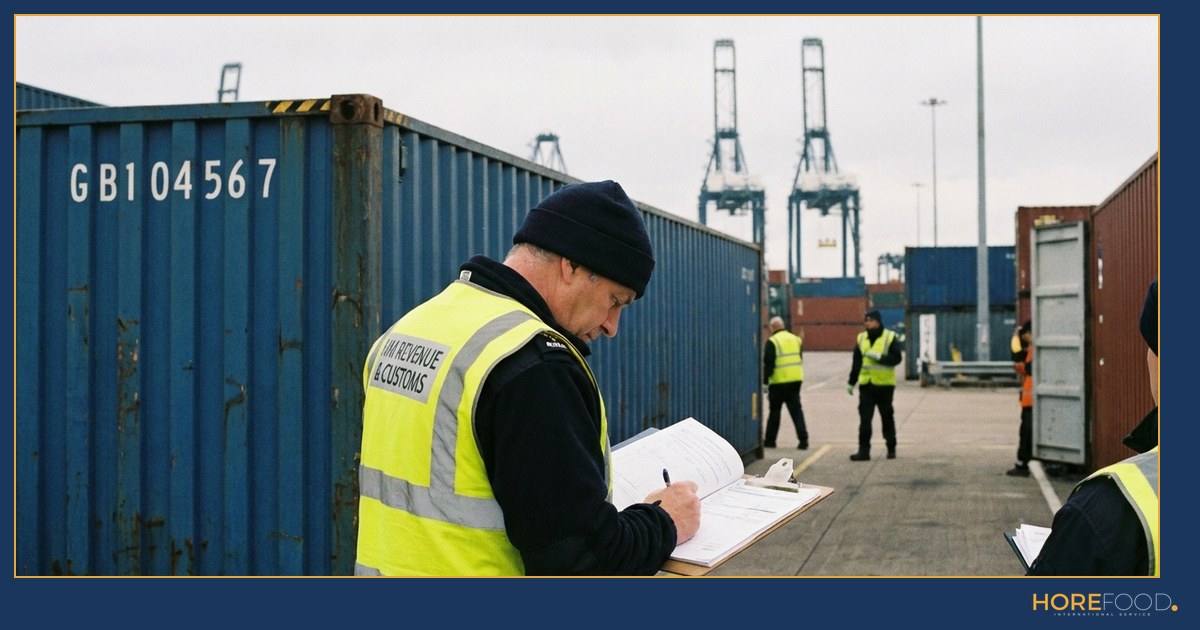
If you buy Italian food for the UK, importing after Brexit is no longer a single-market purchase — it is a customs import from a third country, with duty, import VAT and, for many products, sanitary and phytosanitary (SPS) checks. This guide explains what changed, how the Border Target Operating Model (BTOM) works, and who does what, so UK buyers can source Italian food without surprises at the border.
This guide is general information, not customs or legal advice. UK border rules change frequently — always confirm current requirements on GOV.UK and with your customs agent before you ship.
Is buying Italian food into the UK still like buying inside the EU?
No. Since Brexit, Great Britain is a third country for EU trade, so a sale from Italy to the UK is a customs import, not an intra-community supply. That means a customs declaration, a commodity code, potential duty, and import VAT — none of which apply when the same goods move between two EU member states. Northern Ireland follows different arrangements; this guide covers imports into Great Britain (England, Scotland and Wales).
In practice, two things replace the old frictionless flow: customs formalities on every consignment, and — for products of animal origin and other regulated goods — SPS controls under the Border Target Operating Model.
What is the Border Target Operating Model (BTOM)?
The Border Target Operating Model (BTOM) is the UK framework, fully in force from 30 April 2024, that sets risk-based SPS controls on food, plants and animal products entering Great Britain. It sorts goods into three risk categories — high, medium and low — and each category carries different documentation and physical-check requirements. The goal is to check high-risk goods closely while letting low-risk goods move with lighter controls.
Inspection rates depend on the risk category assigned to the commodity code, according to GOV.UK:
| Risk category | Typical requirement | Physical/identity checks |
|---|---|---|
| Low risk | Commercial documents; no health certificate | Not routinely inspected |
| Medium risk | Export Health Certificate + pre-notification | Between 1% and 30% |
| High risk | Full certification + pre-notification | Up to 100% |
Which SPS checks and health certificates apply to Italian food?
Products of animal origin (POAO) — cheese, cured meats, dairy and similar — are the categories most affected by BTOM, while ambient goods such as dried pasta, rice, coffee, canned tomatoes and most preserves are generally low risk. Medium-risk POAO consignments need an Export Health Certificate (EHC), applied for by the exporter in the country of origin, plus pre-notification on the UK IPAFFS system at least one working day before arrival.
Key SPS documents and steps you will meet:
- Export Health Certificate (EHC) — issued in Italy for medium/high-risk animal products.
- IPAFFS pre-notification — the UK importer files the notification, which generates a CHED reference.
- Border Control Post (BCP) checks — where consignments may be stopped for identity and physical inspection.
- Commodity code — determines the risk category, the duty rate and whether an EHC is required.
Because certification is issued in the country of origin, coordination between your Italian supplier and your UK customs setup matters more than it did before Brexit.
How do import duty and VAT work now?
On a UK import you may owe customs duty and you will normally account for import VAT, both driven by the commodity code and the customs value of the goods. Many Italian food lines carry a low or zero tariff, but this depends on the specific code — you cannot assume duty-free. Import VAT is usually handled through Postponed VAT Accounting (PVA), which lets a UK VAT-registered business declare and recover import VAT on the same VAT Return instead of paying it up front (GOV.UK).
To import at all you need a GB EORI number, and you should keep your customs paperwork and import VAT records (such as the C79 or your monthly PVA statement) for your return.
Who is the importer of record, and who handles customs clearance?
The importer of record is the party legally responsible for the UK import declaration, duty and VAT — under our standard delivery terms that is normally the UK buyer, who acts as importer of record. Most UK importers appoint a customs agent or freight forwarder to file declarations and clear goods, rather than doing it in-house. Deciding this before shipping — importer of record, EORI, customs agent, PVA — is what keeps a consignment moving through the border.
For the EU-side comparison, see our guides on importing Italian food into the EU and EU reverse-charge VAT on Italian food.
How Horefood helps
Horefood is an Italian food and beverage wholesaler — a trade name of Horecarte B.V. (KvK 69696985) — with 10,000+ references across pasta and rice, preserves, delicatessen, cheese, cured meats, beverages and more. We ship on pallets from our Northern Italy hub, and we prepare the export paperwork on the Italian side. For UK buyers it is important to be clear: SPS checks, health certificates and customs clearance are a separate process from single-market trade, and the UK import itself is handled by you or your customs agent as importer of record. We support that by supplying the commercial and origin documentation your broker needs, and by flagging which product categories are ambient (low risk) versus animal-origin.
Sourcing Italian food for the UK? Open your B2B account · browse the catalogue · talk to our team.
Sources
- GOV.UK — Border Target Operating Model: information leaflets for businesses
- GOV.UK — Check risk categories for animals and animal products imported from the EU to Great Britain
- GOV.UK — Import food and animal products into Great Britain
- GOV.UK — Import goods into the UK: step by step
- GOV.UK — Check when you can account for import VAT on your VAT Return (Postponed VAT Accounting)